Material Selection for Manhole Covers
Choosing the correct material is one of the most important decisions when designing or upgrading gas station infrastructure. Different materials provide varying levels of strength, durability, corrosion resistance, and ease of handling.
Cast Iron Covers
Cast iron has long been used due to its high compressive strength and ability to withstand heavy vehicle traffic. However, its substantial weight creates handling challenges during maintenance operations. Over time, exposure to moisture and fuel vapors may also lead to rust formation if protective coatings deteriorate.
Composite Manhole Covers
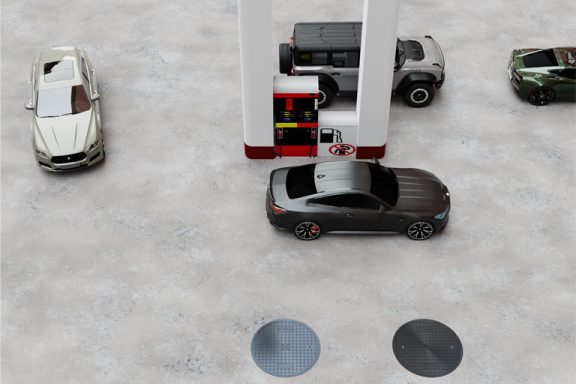
Composite materials have become increasingly popular in modern fuel stations. Their advantages include:
• Lightweight construction for safer manual handling
• Resistance to corrosion, chemicals, and moisture
• Reduced risk of theft due to non-resale value
• Non-conductive and has no electrical hazard.
Because fuel stations demand frequent inspection access, lighter covers significantly reduce worker strain and improve operational efficiency.
Material choice should always consider environmental exposure, expected traffic loading, maintenance frequency, and safety requirements.
Load Rating and Traffic Performance
Fuel stations experience constant traffic movement, ranging from passenger vehicles to heavy fuel tankers delivering petroleum products. Manhole covers must therefore be designed to withstand repeated dynamic loads without deformation or failure.
Industry practice typically recommends covers rated D400 or higher, ensuring sufficient resistance to heavy axle loads common in refueling areas.
Insufficient load capacity can result in:
• Surface cracking or settlement
• Rocking covers that create noise and safety hazards
• Damage to underlying tank collars or chambers
• Accelerated infrastructure deterioration
A properly rated cover protects both vehicles and underground equipment while reducing lifecycle maintenance costs.
Sealing Performance and Vapor Control
Sealing capability is particularly critical in fuel station applications. Underground storage tanks contain volatile fuels that generate vapors capable of posing fire hazards or environmental risks if released.
Effective sealing systems perform two essential functions:
1. Preventing vapor escape
Tight-fitting lids and gasket systems contain vapors within controlled spaces, supporting regulatory compliance and workplace safety.
2. Blocking water intrusion
Rainwater infiltration can contaminate fuel, damage monitoring equipment, and increase operational costs.
High-quality sealing solutions help maintain fuel purity, reduce evaporation losses, and protect groundwater resources. In many regions, vapor containment is directly linked to environmental regulations governing petroleum storage facilities.
Importance of Proper Manhole Installation
Even the highest-quality manhole cover cannot perform effectively if installation is inadequate. Installation practices determine long-term stability and safety.
Key installation principles include:
• Accurate leveling to prevent rocking movement
• Proper bedding and frame support
• Alignment with finished pavement elevation
• Adequate drainage around the chamber
• Secure anchoring to prevent displacement under traffic loads
Incorrect installation often leads to premature failure, water leakage, or structural damage. Professional installation teams familiar with petroleum environments ensure that covers remain stable under continuous operational stress.
Fuel Tank Manholes: Access and Operational Safety
The fuel tank manhole serves as the primary interface between technicians and underground storage systems. It allows inspection, cleaning, measurement, and repair operations without excavating the tank itself.
A well-designed fuel tank manhole supports safe maintenance while protecting personnel and the surrounding environment.
Design Considerations
Effective fuel tank manholes typically incorporate:
• Durable construction materials capable of resisting corrosion and chemical exposure
• Adequate dimensions for safe worker access and equipment handling
• Secure locking systems to prevent unauthorized entry
• Integrated safety features, including gas monitoring and fire detection options
These design elements help reduce accident risk while improving operational efficiency.
Functional Benefits
Fuel tank manholes provide several operational advantages:
• Simplified inspection and maintenance procedures
• Safer working conditions for personnel
• Early detection of leaks or structural issues
• Protection against environmental contamination
• Compliance with safety and environmental standards
Without properly designed access points, maintaining underground fuel systems would require costly excavation and operational downtime.
Maintenance Practices for Fuel Tank Manholes
Long-term reliability depends on routine inspection and preventative maintenance.
Recommended practices include:
• Scheduled inspections to identify damage, corrosion, or sealing deterioration
• Cleaning operations to remove deposits, debris, or moisture accumulation
• Timely replacement of worn gaskets, bolts, or locking components
• Personnel training focused on safe handling and inspection procedures
Consistent maintenance extends equipment lifespan and ensures safe fuel management operations.
Construction of Buried Oil Tanks at Gas Stations
Underground oil tanks represent the core storage infrastructure of fuel stations. Their installation requires strict engineering control to guarantee structural integrity and environmental safety.
Excavation and Site Preparation
Construction begins with excavation using mechanical equipment. After excavation:
• Drainage ditches are constructed around the foundation pit
• Water collection wells are installed
• Groundwater is continuously removed using pumps
Unstable soil conditions such as loose sand or weak layers must be addressed immediately to maintain excavation stability.
Tank Cushion Preparation
A bedding layer of medium-coarse sand is placed at the base of the excavation, typically around 30 cm thick. This cushion provides:
• Even load distribution
• Protection for anti-corrosion coatings
• Stable positioning for the tank structure
Once the foundation is leveled, the tank can be prepared for placement.
Oil Tank Hoisting
Before lifting operations, inspectors verify:
• Structural condition of the tank
• Integrity of anti-corrosion coatings
• Stability of crane equipment and lifting systems
Careful hoisting ensures accurate positioning and prevents mechanical damage during installation.
Backfilling and Anti-Floating Measures
After placement, tanks are partially filled with water while backfilling progresses. This method stabilizes the tank and prevents flotation caused by groundwater pressure.
Key requirements include:
• Maintaining internal water levels below surrounding water levels
• Using sand backfill around the tank body
• Preventing direct contact between stones and tank surfaces
Anti-floating belts and fixed saddles are often installed to secure the tank permanently.
Technical Requirements for Underground Oil Tanks
Buried fuel tanks must satisfy strict engineering and safety specifications.
Typical requirements include:
• Storage of flammable fuels such as gasoline or diesel
• Installation of flame arresters on vent pipes
• Controlled operating pressure and temperature conditions
• Minimum burial depth to ensure mechanical protection
• Static grounding systems to prevent electrostatic discharge
Ventilation systems are designed to release vapor safely while preventing external ignition sources from entering the tank.
Corrosion protection is especially important because underground environments remain humid and chemically aggressive. Sandblasting followed by protective coatings significantly extends tank service life.
Manhole Construction Across Utility Infrastructure
While fuel stations represent a specialized application, manholes are widely used across many underground utility systems.
Duct Bank Systems
Manholes provide access points for pulling and maintaining electrical or telecommunications conduits. They act as junction locations where conduit routes change direction or converge.
Sewer Networks
In wastewater systems, manholes allow inspection, cleaning, and connection of pipelines. They are strategically placed where pipe alignment or elevation changes occur.
Stormwater Drainage
Drainage manholes manage large water volumes during heavy rainfall and enable debris removal to maintain flow efficiency.
Electrical Infrastructure
Electrical manholes protect underground power cables while allowing safe access for installation and repairs. Heavy-duty covers prevent accidental contact or unauthorized entry.
Telecommunications Networks
Telecommunication manholes support fiber cable routing, splicing operations, and network expansion while shielding sensitive equipment from environmental damage.
Across all applications, proper placement improves accessibility and reduces long-term maintenance costs.
Material and Design Considerations for Manholes
Manholes must be engineered according to system requirements and environmental conditions.
Common construction materials include:
• Precast concrete for structural strength
• Brick construction for smaller installations
• Polymer or composite structures for corrosion resistance and lightweight handling
Design considerations involve:
• Required access space
• Pipe or cable dimensions
• Traffic loading conditions
• Maintenance accessibility
Strategic placement ensures efficient inspection without unnecessary excavation.
Safety, Compliance, and Long-Term Performance
Gas station underground infrastructure operates under strict safety and environmental regulations due to the hazardous nature of stored fuels.
Key safety objectives include:
• Preventing fire and explosion risks
• Protecting groundwater and soil from contamination
• Ensuring safe working conditions for maintenance personnel
• Maintaining structural stability under traffic loads
Manhole covers, fuel tank access systems, and buried oil tanks must function together as an integrated system rather than independent components.
Routine inspections, professional installation, and correct material selection collectively reduce risk and extend infrastructure lifespan.
Conclusion
Behind every modern gas station lies a carefully engineered underground system designed to store fuel safely, distribute utilities efficiently, and protect the surrounding environment. Manhole covers, fuel tank manholes, and buried oil tanks form essential links between surface operations and hidden infrastructure.
Selecting appropriate materials, ensuring adequate load capacity, implementing reliable sealing systems, and following proper installation procedures are fundamental to safe operation. Equally important are ongoing maintenance practices and adherence to construction standards.
When properly designed and maintained, these underground components deliver long-term reliability, operational efficiency, and environmental protection—ensuring that fuel stations continue to operate safely while meeting modern infrastructure demands.