SMC vs RTM
A General Introduction and Comparison of Fiberglass Composite Materials about SMC, RTM, and RFI
Understanding SMC Composite Materials
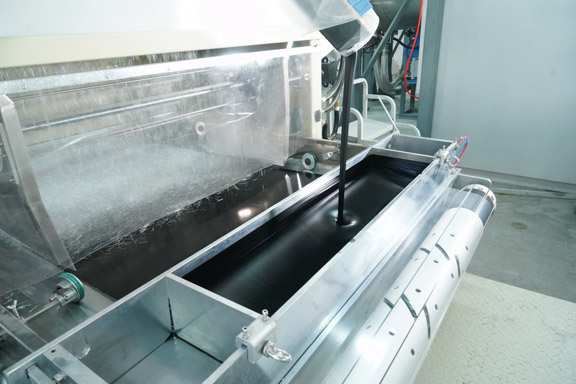
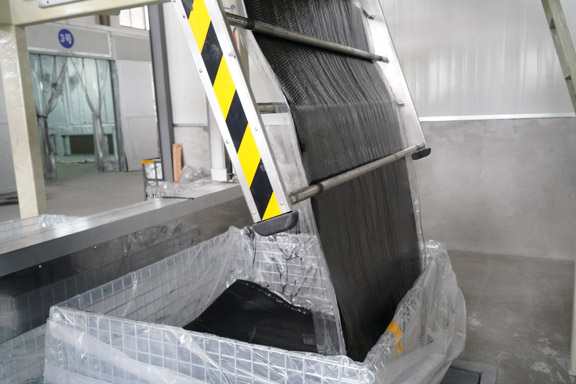
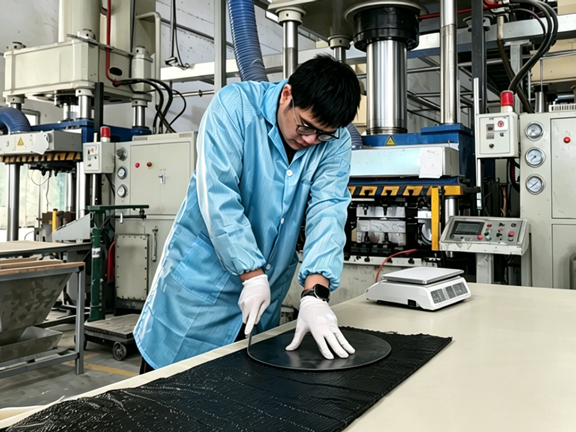
SMC, or Sheet Molding Compound, is a compression molding process that combines thermoset resin, chopped fiberglass, fillers, and additives into sheet-form raw materials. The sheets are compressed under heat and pressure inside a mold to form rigid composite products.
SMC is widely used because of its cost efficiency and suitability for mass production. The process allows manufacturers to produce large quantities of standardized infrastructure products with relatively short production cycles.
SMC materials commonly use polyester or vinyl ester resin systems reinforced with fiberglass. Mineral fillers such as calcium carbonate are often added to reduce cost and improve stiffness. The final products exhibit good mechanical strength, corrosion resistance, and electrical insulation.
One major advantage of SMC is its suitability for outdoor infrastructure environments. Unlike metal components, SMC products do not rust or corrode when exposed to rainwater, wastewater, road salt, or underground moisture. This makes them highly suitable for municipal drainage and underground utility systems. 1. Composite manhole covers. 2. Drainage grates. 3. Utility meter boxes. 4. Electrical enclosures. 5. Cable trench covers. 6. Telecom handhole and access covers 7. Pedestrian platform panels
SMC products are commonly installed in sidewalks, residential communities, industrial parks, public roads, commercial developments, and transportation projects.
Understanding RTM Composite Materials
Composite Material Products in Modern Infrastructure: How to Select from SMC and RTM
Composite materials have become increasingly important in modern infrastructure development due to their combination of strength, corrosion resistance, lightweight performance, and long service life. Compared with traditional materials such as cast iron, steel, or concrete, composite products offer improved durability and reduced maintenance requirements in harsh outdoor environments. Among the many composite manufacturing technologies available today, Sheet Molding Compound (SMC) and Resin Transfer Molding (RTM) are two of the most widely used processes for infrastructure products.
These manufacturing methods support the production of drainage systems, utility enclosures, telecom handholes, cable trenches, access covers, electrical boxes, and many other public infrastructure components. As cities continue expanding and infrastructure systems become more complex, SMC and RTM composite products are increasingly replacing traditional metal-based solutions.
However, some infrastructure decision maker still not familiar with composite products. Infrastructure projects that exceed their planned budget and schedule, which affect their status or reputation. Let’s figure out SMC with RTM and RFI for their pros and cons briefly.
Application Domains
Material | Typical Applications |
|---|---|
RFI | High-performance automotive panels, aerospace components, sports equipment, marine applications. |
SMC | manhole covers, underground boxes, drainage grates. Automotive body panels, electrical housings, industrial parts, |
RTM | automotive structural components, wind turbine blades, high-end sports equipment, composite tanks. trench covers, gasoline staion covers, |
Extended Comparison of RFI, SMC, and RTM Composite Materials
Property | RFI (Resin-Film Infusion) | SMC (Sheet Molding Compound) | RTM (Resin Transfer Molding) |
|---|---|---|---|
Surface Feel | Smooth, refined, premium tactile surface; similar to aerospace-grade composites | Slightly rougher due to fillers and chopped fibers; often requires coating | Smooth and uniform; excellent molded finish with high-detail surfaces |
Skin-Friendliness | Very good after curing; low exposed fiber risk | Moderate; poorly finished edges may expose glass fibers causing irritation | Good to excellent; closed molding minimizes exposed fibers |
Load-Bearing Capacity | Very high due to continuous fiber reinforcement | Moderate to high depending on filler and fiber ratio | High; excellent structural efficiency with engineered fiber placement |
Compressive Strength | High; suitable for structural components | Moderate; fillers improve compression but reduce toughness | High; especially strong with woven fiber fabrics |
Impact Resistance | Excellent energy absorption | Moderate; chopped fibers reduce crack propagation control | High; better crack resistance than SMC |
Fatigue Resistance | Excellent under repeated loading | Moderate | Very good |
Service Life | 20–50 years depending on environment | 10–30 years | 20–40 years |
UV / Sunlight Resistance | Good with UV-stable gel coat or additives | Moderate; may chalk or fade over time | Very good with protective coatings |
Water Resistance | Excellent with epoxy/vinyl ester resin | Good; polyester systems may absorb moisture slowly | Excellent; closed molding reduces porosity |
Corrosion Resistance | Excellent | Excellent | Excellent |
Thermal Stability | High; suitable for elevated temperatures | Moderate | High |
Dimensional Stability | Excellent | Moderate | Excellent |
Weather Resistance | Very good in outdoor environments | Good but surface aging occurs faster | Excellent with proper resin system |
Fire Resistance | Can be improved with additives | Often improved using fillers and fire retardants | Can achieve high fire performance with engineered resin |
Chemical Resistance | Excellent against acids, salts, and industrial chemicals | Good to moderate depending on resin | Excellent, especially vinyl ester and epoxy systems |
Long-Term Appearance | Maintains smoothness and gloss longer | Surface may become dull or chalky | Very stable appearance over time |
Detailed Technical Comparison
1. Surface Feel and Tactile Quality
RFI
RFI products typically have a highly refined surface because the resin film distributes evenly during curing. Continuous fibers remain buried beneath the resin-rich outer layer, creating a smooth and premium feel. This process is commonly used in aerospace interiors and high-end transportation panels where touch quality matters.
SMC
SMC surfaces are generally harder and less refined. Since SMC commonly contains calcium carbonate or mineral fillers, the surface can feel slightly dry or grainy. Compression molding may also leave minor flow marks. A gel coat or paint layer is often added to improve appearance and touch.
RTM
RTM provides one of the best surface finishes among industrial composite processes. The closed mold accurately replicates mold details, producing smooth, glossy surfaces suitable for visible architectural or automotive components.
Period of Customization
RFI: Medium to long lead time; prepreg needs to be prepared, fiber layout customized.
SMC: Short; easy to adjust formula, easy to adjust mold and replace nameplate; samples require load testing before mass production.
RTM: Medium; mold design is time-consumine, usually, but once the mold is ready, multiple iterations are possible quickly.
2. Skin-Friendliness
Factor | RFI | SMC | RTM |
|---|---|---|---|
Fiber Exposure Risk | Very low | Moderate | Very low |
Surface Irritation Risk | Low | Medium if unfinished | Low |
Suitability for Public Contact Areas | Excellent | Bare hands move causes itchiness. | Excellent |
Notes
Poorly trimmed SMC parts may expose chopped fiberglass strands.
RTM and RFI usually encapsulate fibers more completely.
For applications involving pedestrians, utility covers, benches, or public infrastructure, RTM and RFI generally provide better skin comfort.
3. Load-Bearing Capacity
RFI
RFI can achieve very high structural performance because continuous fibers maintain load paths throughout the component. Carbon or glass fabrics provide excellent stiffness and strength.
SMC
SMC performs well under distributed loads but is generally weaker under concentrated structural stress because chopped fibers do not efficiently transfer loads across long distances.
RTM
RTM offers excellent engineered strength. Fiber orientation can be optimized to support directional loads, making RTM ideal for structural covers, vehicle components, and industrial platforms.
4. Compressive Strength
Approximate ranges (varies by formulation):
Material | Typical Compressive Strength |
|---|---|
RFI | 250–600 MPa |
SMC | 150–350 MPa |
RTM | 250–500 MPa |
Observations
SMC benefits from mineral fillers that increase stiffness but reduce ductility.
RTM and RFI generally outperform SMC in structural engineering applications.
5. Impact Resistance
RFI
Continuous fibers effectively distribute impact energy. Cracks propagate slowly, making RFI suitable for aerospace and performance transportation.
SMC
SMC can crack more suddenly under severe impact because chopped fibers do not bridge cracks as effectively.
RTM
RTM structures typically provide balanced impact performance and toughness, especially when woven fabrics are used.
6. Service Life
The actual lifespan depends heavily on:
UV exposure
Chemical environment
Load cycles
Temperature changes
Resin type
General Trends
RTM and RFI often exceed 25 years in road infrastructure applications, and 30 years+ duration span in non-traffic areas
SMC: Color fading will begin within six months to one year after installation. In frequently trafficked urban roads, its service life is approximately 15-20 years; in non traffic installation may achieve 30 years.
7. Sunlight and UV Exposure Effects
RFI
UV exposure can gradually yellow the resin surface if no UV stabilizer or coating is applied. However, aerospace-grade coatings provide excellent long-term stability.
SMC
SMC is more prone to:
Surface color fading (turns to a white-grey color)
Loss of gloss
Microcracking under long-term UV exposure
This is especially true with low-cost polyester systems.
RTM
RTM components usually resist UV aging well when manufactured with:
Vinyl ester resin
UV-resistant gel coats
Pigmented protective layers
8. Water, Moisture, and Freeze-Thaw Resistance
Property | RFI | SMC | RTM |
|---|---|---|---|
Moisture Absorption | Very low | Moderate | Low |
Freeze-Thaw Durability | Excellent | Good | Excellent |
Delamination Risk | Low | Moderate | Low |
RTM and RFI benefit from lower void content, reducing water penetration.
9. Long-Term Structural Stability
RFI
Excellent long-term mechanical retention because continuous fibers resist fatigue and creep.
SMC
Over many years, filler-rich SMC may gradually lose surface integrity and stiffness under heavy environmental stress.
RTM
Very stable due to controlled fiber placement and low porosity.
10. Typical Application Domains Based on Performance
Requirement | Best Choice |
|---|---|
Public-touch surfaces | RTM or RFI |
Heavy structural load | RFI or RTM |
Cost-sensitive mass production | SMC |
Outdoor infrastructure | RTM or SMC |
High-end appearance | RTM |
Extreme durability | RFI |
Utility covers and drainage grates | SMC or RTM |
Aerospace or performance transportation | RFI |
Comparison of RFI, SMC, and RTM for Outdoor Infrastructure Applications
Outdoor infrastructure products include:
Composite manhole covers
Drainage grates
Utility boxes
Underground handholes
Cable trenches
Telecom enclosures
Pump station covers
Municipal access covers
Pedestrian decking
Industrial trench covers
These applications require materials that can withstand:
Sunlight and UV radiation
Rain and groundwater
Freeze-thaw cycles
Traffic loading
Chemical corrosion
Long-term outdoor aging
Public contact and safety requirements
Overall Suitability Ranking for Outdoor Infrastructure
Process | Outdoor Suitability | Main Advantages | Main Weakness |
|---|---|---|---|
RTM | Excellent | High durability, smooth finish, strong structure | Higher tooling cost |
SMC | Very Good | Cost-effective, fast production | Surface aging over time |
RFI | Specialized / High-End | Very high strength and lightweight | Expensive for municipal infrastructure |
1. Weather Resistance
Property | RFI | SMC | RTM |
|---|---|---|---|
Rain Resistance | Excellent | Good | Excellent |
Freeze-Thaw Stability | Excellent | Good | Excellent |
Humidity Resistance | Excellent | Moderate to good | Excellent |
Outdoor Aging | Very good | Moderate | Excellent |
Overall Evaluation
Category | Best Performer |
|---|---|
Surface Finish | RTM |
Structural Strength | RFI |
Cost Efficiency | SMC |
Outdoor Durability | RTM |
Skin-Friendliness | RTM / RFI |
Complex Shapes | RTM |
Fast Production | SMC |
Premium Engineering Performance | RFI |
SMC dominates low-to-medium cost mass production and Rapidly Developing Urban Infrastructure.
RTM is preferred for premium cost for appearance and higher structural reliability .
RFI is usually reserved for specialized high-performance engineering applications where weight reduction and maximum strength are priorities,not the infrastructure parts.
Key Summary
RFI: High fiber content, strong and lightweight, low VOC, expensive, moderate processing complexity, excellent for performance-critical parts.
SMC: Cost-effective, easy for high-volume simple shapes, higher dust/odor, moderate mechanical properties, fast cycle times.
RTM: Very flexible for complex shapes, excellent finish, low voids, moderate cost, medium environmental footprint, ideal for precise and high-strength parts.
Infrastructure Advantages of Composite Products
Composite materials offer several important advantages over traditional infrastructure materials.
Corrosion Resistance
Infrastructure systems are continuously exposed to water, chemicals, soil moisture, and industrial contaminants. Steel products may corrode, while concrete can crack or deteriorate over time. Composite materials resist corrosion naturally, helping extend product lifespan and reduce maintenance costs.
Lightweight Installation
SMC and RTM products are significantly lighter than cast iron or concrete alternatives. Reduced weight improves transportation efficiency and simplifies installation, especially in urban construction projects where labor and equipment costs are important considerations.
Electrical Insulation
Composite products are non-conductive, making them suitable for electrical utility systems, telecommunications infrastructure, and underground cable protection. This improves operational safety in public areas.
Long Service Life
Well-designed composite infrastructure products can remain functional for decades. RTM products in particular provide excellent long-term dimensional stability and resistance to environmental aging.
Design Flexibility
Composite manufacturing allows customized shapes, textures, anti-slip surfaces, logos, and color integration. This is especially valuable in modern urban design and commercial infrastructure developments.
Outdoor Performance and Environmental Durability
Outdoor infrastructure requires materials capable of resisting sunlight, temperature variation, and heavy traffic loading. Both SMC and RTM composites perform well in these environments.
RTM products generally provide superior UV resistance and surface durability due to their lower porosity and more uniform resin distribution. SMC products remain highly effective for standard municipal applications where cost efficiency is a priority.
Composite products also perform well under freeze-thaw conditions, reducing cracking risks commonly associated with concrete structures.
In wastewater systems and coastal infrastructure, composite materials resist salt corrosion and chemical exposure better than traditional metals. This makes them suitable for ports, water treatment plants, pump stations, and industrial facilities.
Future Trends in Infrastructure Composites
As cities move toward smarter and more sustainable infrastructure systems, demand for composite materials continues growing. Municipalities increasingly seek lightweight, corrosion-resistant, and low-maintenance products that reduce lifecycle costs.
SMC remains a highly economical solution for large-volume infrastructure production, while RTM is becoming more common in premium infrastructure projects requiring improved appearance, structural performance, and long-term durability.
Future developments are expected to focus on:
Higher recycled material usage
Improved fire resistance
Enhanced UV protection
Smart infrastructure integration
Sustainable manufacturing methods
Composite materials are no longer limited to specialized industrial sectors. They are now an essential part of modern public infrastructure, supporting safer, more durable, and more efficient urban environments worldwide.
Comparison of RFI, SMC, and RTM Composite Manufacturing in Energy Consumption, Labor Cost, and Automation
Composite manufacturing technologies differ significantly in production efficiency, operational cost, labor requirements, and automation levels. Among the major industrial composite processes, Resin-Film Infusion (RFI), Sheet Molding Compound (SMC), and Resin Transfer Molding (RTM) each represent different balances between material performance, manufacturing complexity, and production economics.
When evaluating these technologies for infrastructure, automotive, aerospace, and industrial applications, manufacturers often focus on several important operational factors:
Electricity consumption
Human labor requirements
Robotic automation investment
Machine maintenance cost
Production scalability
Understanding these differences helps determine which process is most suitable for high-volume production, customized engineering products, or premium structural applications.
1. Electricity Consumption
RFI Manufacturing
RFI generally has the highest electricity consumption among the three processes. The manufacturing cycle requires:
Vacuum systems
Heated curing ovens or autoclaves
Controlled temperature environments
Long curing periods
In many cases, RFI uses continuous heating for several hours to fully cure the resin film and consolidate the fiber structure. Aerospace-grade applications may require extremely precise temperature and pressure control, further increasing energy demand.
Electricity consumption becomes especially high when:
Large molds are used
Carbon fiber systems are involved
Autoclave curing is required
Multiple heating cycles are needed
As a result, RFI is considered an energy-intensive composite process.
SMC Manufacturing
SMC has moderate electricity consumption and is one of the most energy-efficient methods for mass production.
The process mainly consumes electricity through:
Compression molding presses
Heated steel molds
Mixing and sheet preparation systems
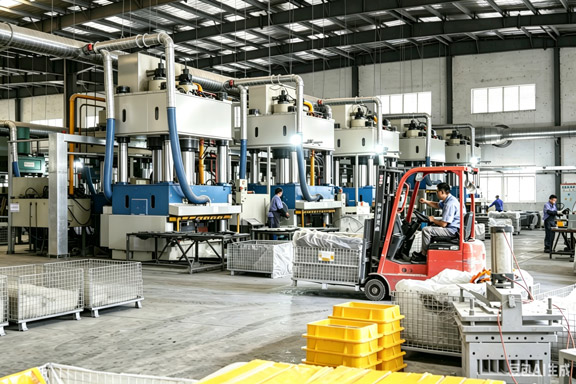
Unlike RFI, SMC production cycles are short, often only several minutes per part. Once the hydraulic compression equipment reaches operating temperature, production can continue continuously with relatively stable energy usage.
Because SMC supports rapid high-volume production, the electricity cost per product is usually lower than RTM and significantly lower than RFI.
RTM Manufacturing
RTM electricity consumption falls between RFI and SMC.
Energy is used for:
Resin injection systems
Mold heating
Vacuum assistance
Resin mixing equipment
RTM does not usually require large autoclaves, which reduces energy demand compared with RFI. However, curing cycles are generally longer than SMC, especially for thick structural parts.
Advanced RTM systems with automated resin control and temperature monitoring may increase electricity usage but improve production consistency.
2. Human Labor Cost
RFI Labor Requirements
RFI is highly labor-intensive.
The process often requires:
Manual fiber placement
Resin film preparation
Vacuum bagging
Layer-by-layer assembly
Detailed inspection procedures
Highly skilled technicians are necessary because product quality depends heavily on precise material positioning and process control.
Labor costs become particularly high in:
Aerospace manufacturing
High-performance transportation
Customized structural engineering
Production speed is relatively slow, which further increases labor cost per unit.
SMC Labor Requirements
SMC has the lowest human labor cost among the three methods.
Most SMC factories operate semi-automated or fully automated production lines that handle:
Sheet feeding
Mold compression
Trimming
Material transport
Operators mainly supervise equipment rather than perform manual layup work.
Because production cycles are fast and repetitive, one production line can manufacture large quantities of products with relatively few workers.
This makes SMC highly suitable for:
Municipal infrastructure products
Automotive panels
Utility covers
Electrical enclosures
where large-scale standardized production is required.
RTM Labor Requirements
RTM requires moderate labor involvement.
Workers typically handle:
Fiber preform placement
Mold preparation
Resin setup
Quality monitoring
Demolding and finishing
Compared with RFI, RTM reduces manual resin handling because the resin is injected automatically into the closed mold.
Labor requirements increase when:
Complex shapes are produced
Multi-piece molds are used
Customized products are required
However, RTM remains significantly less labor-intensive than RFI.
3. Robotic Machine Cost
RFI Automation Investment
RFI automation systems are expensive and technically demanding.
Advanced RFI facilities may require:
Automated tape laying systems
Robotic fiber placement
Large autoclaves
Precision vacuum systems
Environmental control rooms
These systems are commonly found in aerospace and defense industries where extremely high product performance justifies the investment.
Initial capital expenditure for RFI automation is usually the highest among the three processes.
SMC Automation Investment
SMC supports highly efficient industrial automation.
Typical equipment includes:
Hydraulic compression presses
Robotic loading arms
Automated cutting systems
Conveyor systems
Trimming robots
Although large hydraulic presses are expensive, the cost is justified by high production output and relatively low operating cost per part.
SMC offers one of the best returns on investment for automated composite manufacturing.
RTM Automation Investment
RTM automation cost is moderate to high depending on system complexity.
Automated RTM production may include:
Resin injection robots
CNC-controlled molds
Automated vacuum systems
Robotic fiber placement
Digital process monitoring
RTM automation is more flexible than SMC because it can support customized products and varying mold designs.
However, RTM generally has lower production speed than SMC, which affects equipment utilization efficiency.
4. Machine Maintenance Cost
RFI Maintenance
RFI systems require expensive maintenance due to:
Autoclave servicing
Vacuum system calibration
High-temperature equipment wear
Precision control system maintenance
Maintenance personnel often require specialized technical knowledge.
Downtime costs can also be very high in aerospace-grade facilities.
SMC Maintenance
SMC equipment maintenance is relatively predictable and manageable.
Common maintenance includes:
Hydraulic press servicing
Mold cleaning
Heating plate maintenance
Cutting equipment replacement
Because SMC production systems are mature and widely used, spare parts and maintenance expertise are readily available.
Maintenance cost per product is generally low.
RTM Maintenance
RTM systems require moderate maintenance.
Important maintenance areas include:
Resin injection pumps
Mixing systems
Mold sealing systems
Vacuum equipment
Temperature control systems
Resin residue management is critical because cured resin can damage injection systems if cleaning is neglected.
Maintenance costs are typically lower than RFI but higher than SMC.
Overall Manufacturing Comparison
Factor | RFI | SMC | RTM |
|---|---|---|---|
Electricity Consumption | Highest | Lowest per unit | Moderate |
Human Labor Cost | Highest | Lowest | Moderate |
Automation Investment | Very high | High but efficient | Moderate to high |
Maintenance Cost | Very high | Low to moderate | Moderate |
Production Speed | Slow | Very fast | Medium |
Best Production Type | High-performance custom products | Mass production | Mid-to-high-end engineered products |
1. Material Properties
Property | RFI | SMC | RTM |
|---|---|---|---|
Fiber Content | Usually high (30–60% fiber by volume) | Moderate (20–40%) | Moderate to high (30–50%) |
Fiber Type | Long glass fiber, carbon fiber optional | Chopped or continuous glass fibers | Continuous or woven fibers |
Strength & Stiffness | High tensile and flexural strength | Good, but lower than RFI | Very good, tunable by fiber orientation |
Impact Resistance | Excellent | Moderate | High |
Surface Finish | Smooth, ready for painting | Moderate, may require sanding | Excellent, can be molded with great detail |
Density | ~1.5–2 g/cm³ | ~1.8–2 g/cm³ | 1.4–1.9 g/cm³ |
2. Chemical Composition / Raw Materials
Material | RFI | SMC | RTM |
|---|---|---|---|
Resin | Thermoset (polyester, vinyl ester, epoxy) | Unsaturated polyester, vinyl ester | Polyester, vinyl ester, epoxy |
Fillers | None to minimal | Calcium carbonate, clay, talc | Usually minimal, depends on design |
Catalyst / Hardener | Peroxide or epoxy hardener | Peroxide | Peroxide, amine hardeners for epoxy |
Fiber | Continuous or long fibers | Chopped fibers, mats | Continuous fibers, mats, or woven fabrics |
Observation: Chemically, all use thermosetting resins, but SMC often contains fillers to reduce cost; RTM allows more precise control of resin-to-fiber ratio.
3. Raw Material Stocking Status
RFI: Fibers and resin film stocked separately, usually custom prepreg sheets; less readily available than SMC.
SMC: Widely stocked in rolls or sheets; good for high-volume production.
RTM: Resin and fiber fabrics stocked separately; resin often mixed on-demand; more flexible but needs careful inventory management.
4. Environmental Compact & Potential Hazard in Manufacturing
Aspect | RFI | SMC | RTM |
|---|---|---|---|
VOC Emission | Low, closed process | Moderate, cutting/molding generates dust | Low to moderate, closed mold minimizes VOC |
Dust/Fiberglass Hazard | Moderate (fiber handling) | High (dust from chopped fibers) | Low (fibers pre-placed) |
Heat/Exotherm | Moderate | High (large sheets can overheat) | Controlled; depends on mold size and resin |
Waste | Low | Moderate (scraps from trimming) | Low (resin injected; fiber pre-cut) |
Observation: SMC is more hazardous due to dust and filler handling; RFI and RTM are cleaner, especially in controlled molds.
5. Cost & Price
Aspect | RFI | SMC | RTM |
|---|---|---|---|
Material Cost | High (continuous fiber, prepreg film) | Low to moderate | Moderate |
Processing Cost | Moderate (labor-intensive) | Low (high automation possible) | High (requires molds and injection equipment) |
End Product Price | High | Moderate | Moderate to high depending on complexity |
6. Shape & Processing Differences
Feature | RFI | SMC | RTM |
|---|---|---|---|
Process Type | Heat and pressure to infuse resin fiberglass into Cured Thermoset Plastic Parts | Compression molding of sheets | Resin injection into closed mold and into fiber film |
Part Complexity | Moderate | Simple to medium | High; intricate shapes possible |
Cycle Time | Long (hours) | Short (minutes per part) | Moderate (depends on mold size) |
Tooling | Flat or slightly curved plates | Simple molds | Complex molds for 3D shapes |
7. Smell / Odor Levels in Manufacturing Process
RFI: Low, minimal resin exposure if prepreg is handled properly.
SMC: High, strong resin/filler odor during molding.
RTM: Low to moderate, largely contained in closed mold.
8. Quality Control
Aspect | RFI | SMC | RTM |
|---|---|---|---|
Fiber Orientation Control | Excellent | Poor | Good (controlled placement) |
Void Content | Low | Moderate | Low if properly injected |
Dimensional Accuracy | Good | Moderate | Excellent |
Surface Finish | Excellent | Requires knockout holes /polishing | Excellent, molded surface ready |
Final Conclusion
SMC is the most economical process for large-scale infrastructure manufacturing because it combines fast production, low labor cost, and efficient automation. RTM offers a balance between product quality, structural performance, and manufacturing flexibility, making it ideal for premium infrastructure and engineered composite systems. RFI delivers the highest material performance but requires substantial energy, labor, and equipment investment, limiting its use mainly to aerospace and specialized industrial sectors.