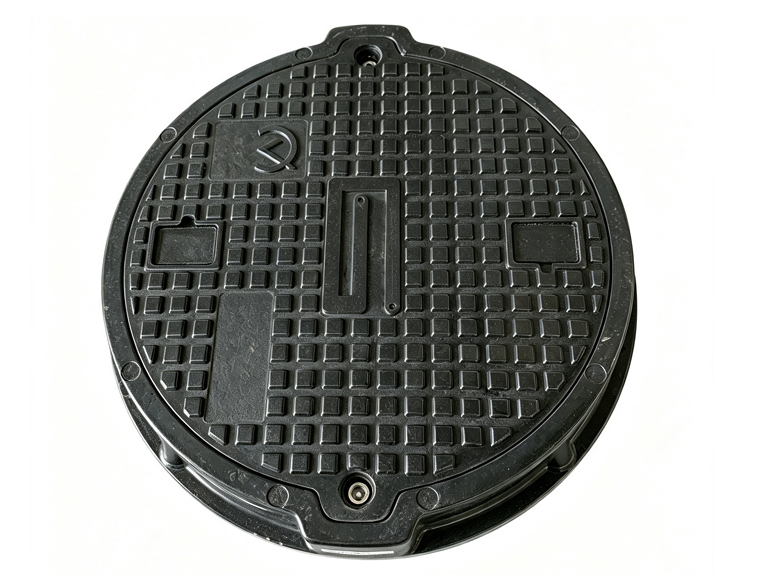
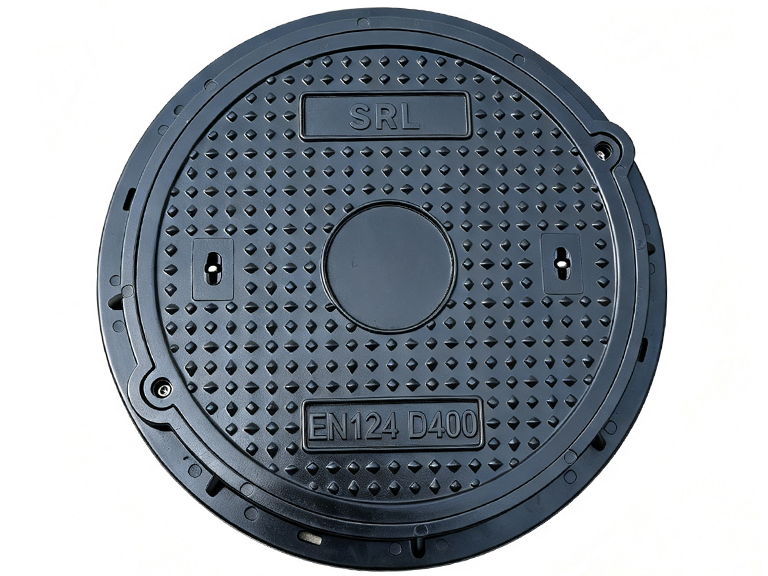
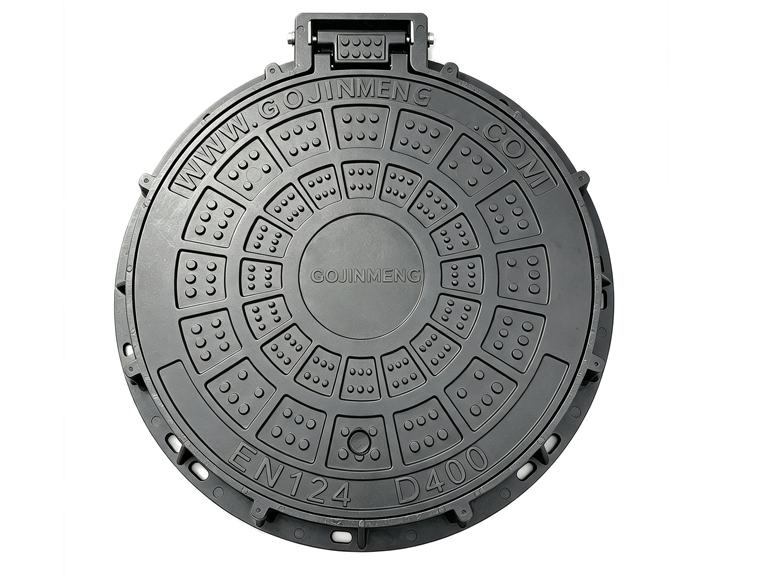
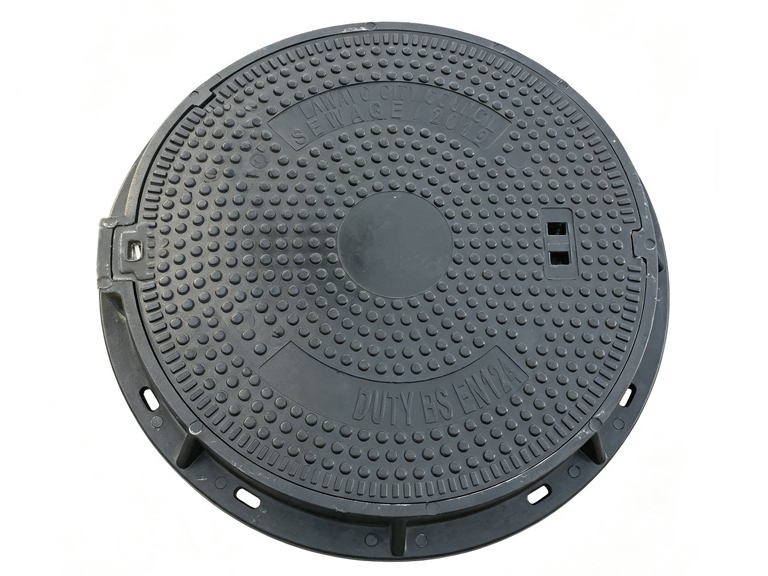
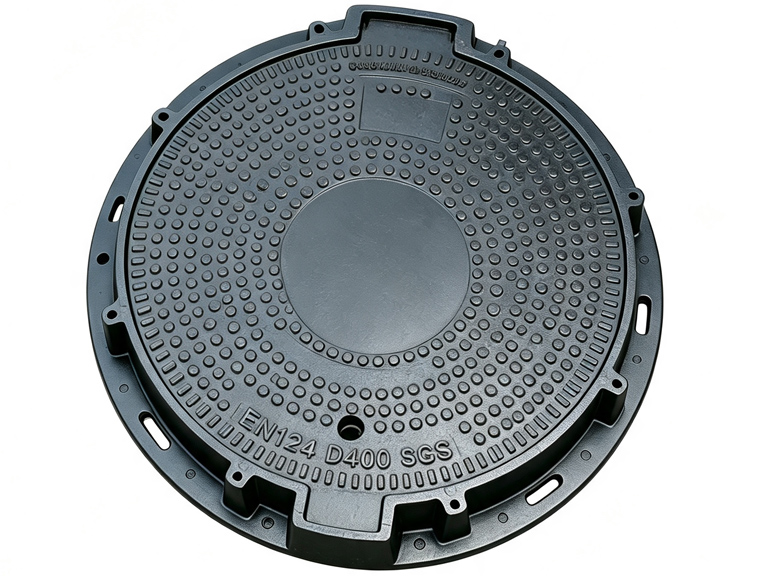
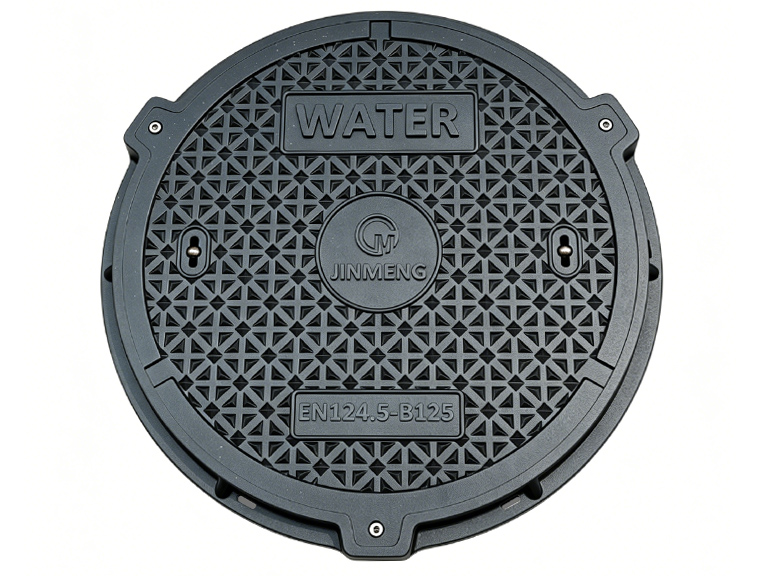
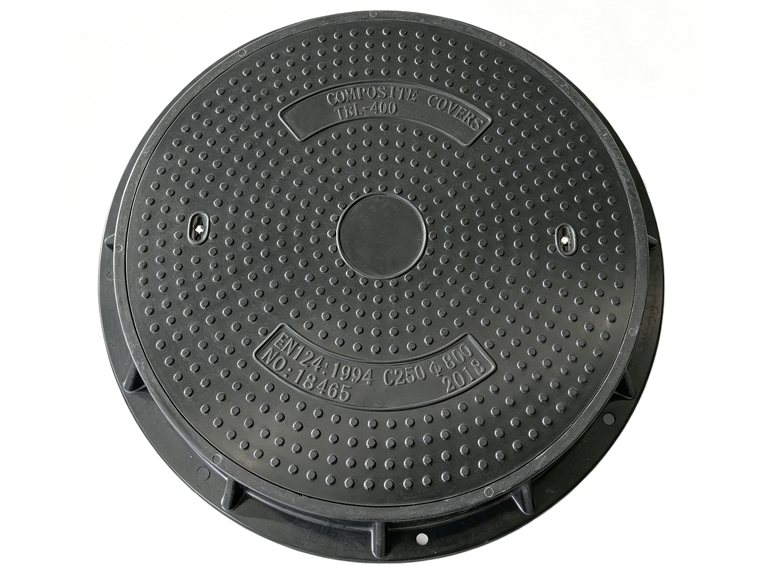
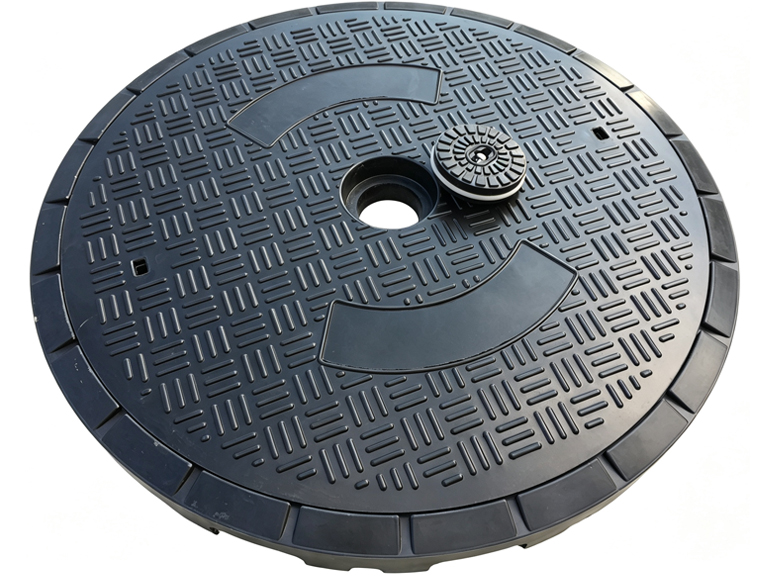
JM-MR124B 355mm(Dia)X50mm(Lid Depth)X75mm(Frame Depth) CO300 mm
Load Rating 12.5 Ton EN124 B125
315mm (12″) C/O Composite Cover and Frame
light Weight
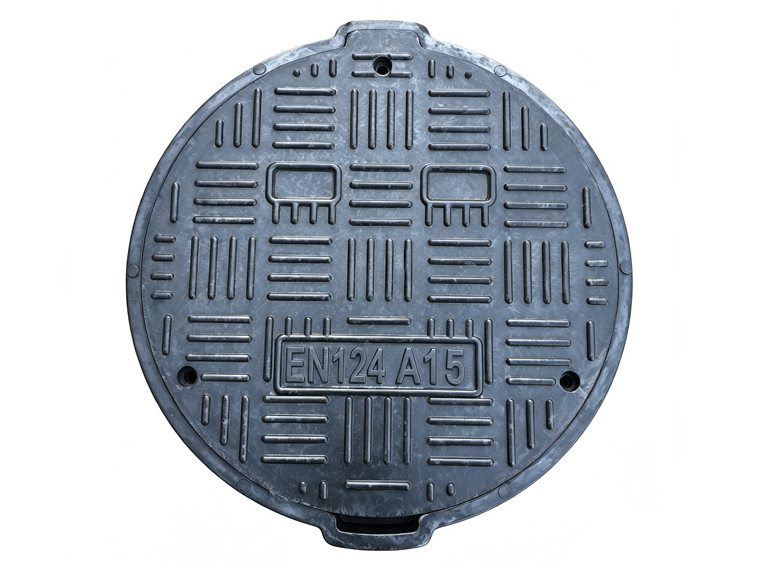
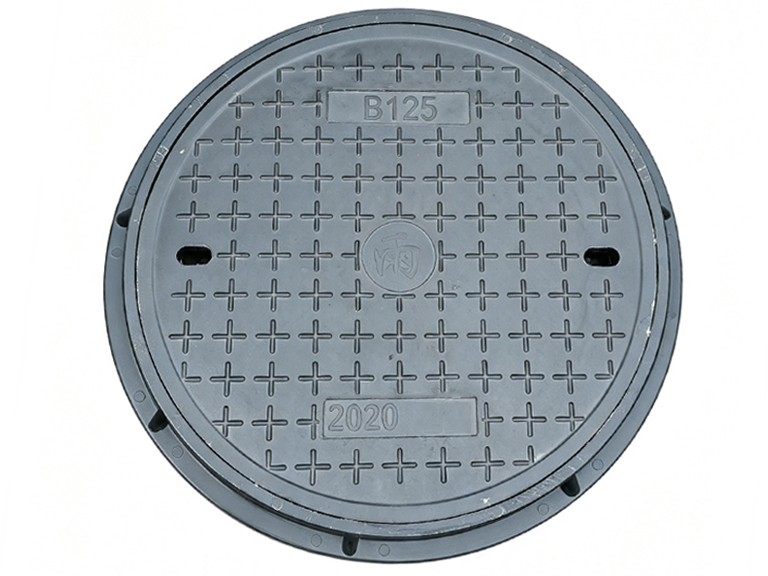
JM-MR123A 375mm(Dia)X32mm(Lid Depth)X100mm(Frame Depth) CO315 mm
Load Rating 1.5 Ton EN124-A15
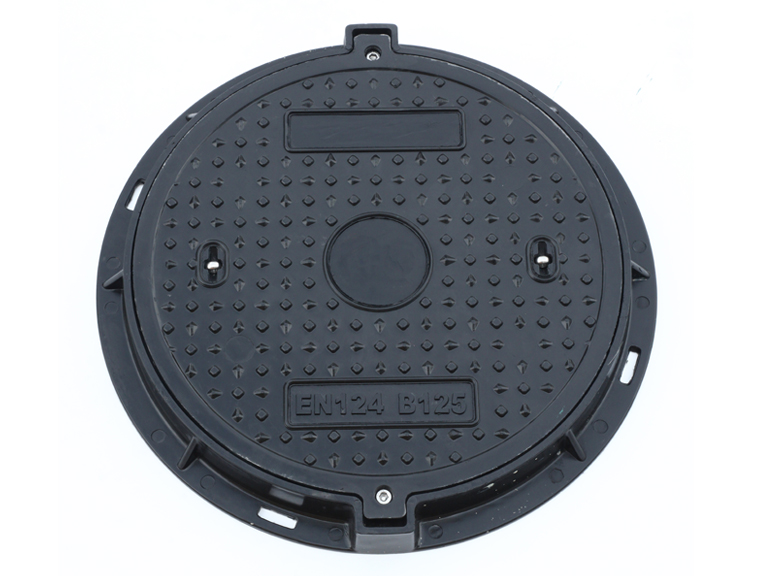
450mm (17.7″) C/O Composite Manhole Cover
Vented Hole
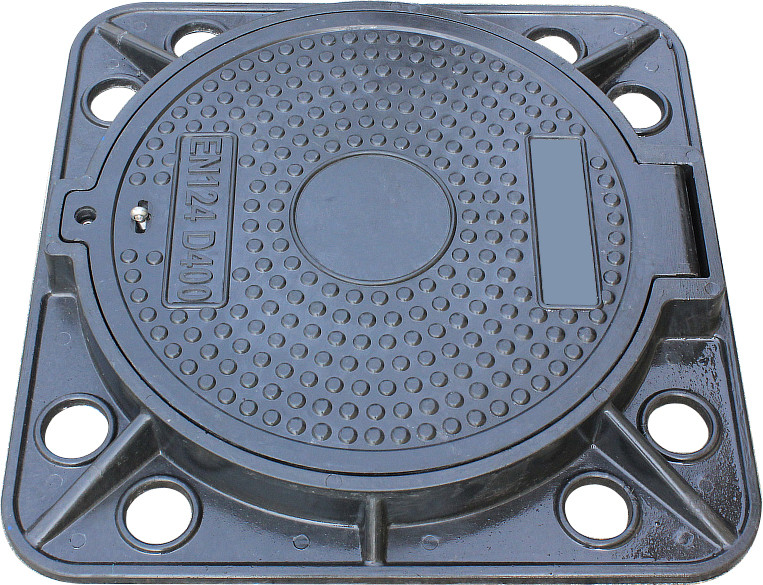
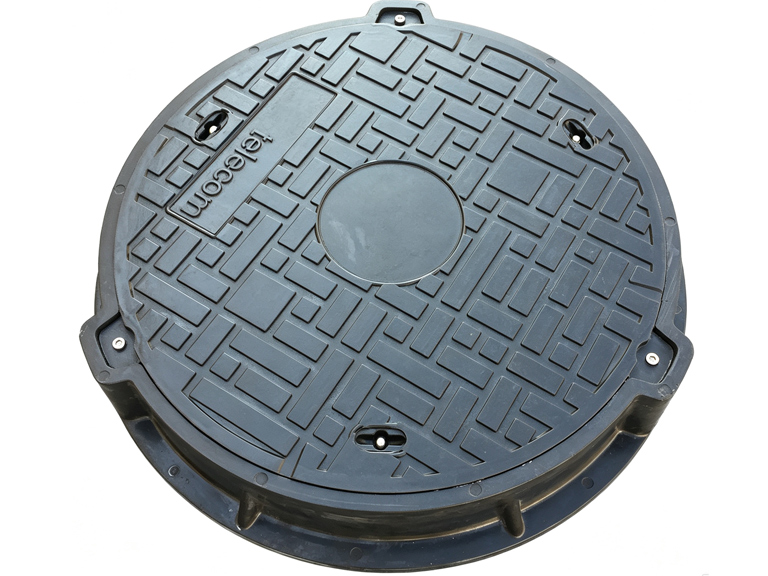
JM-MR104d 500mm(lid Dia)X60mm(Lid Depth)X100mm(Frame Depth) CO450 mm Load Rating 40 Ton EN124-D400
Non Vented
JM-MR104B 500mm(lid Dia)X38mm(Lid Depth)X48mm(Frame Depth) CO450 mm Load Rating 12.5 Ton EN124-B125
550mm (21.65″) C/O Composite Manhole Cover
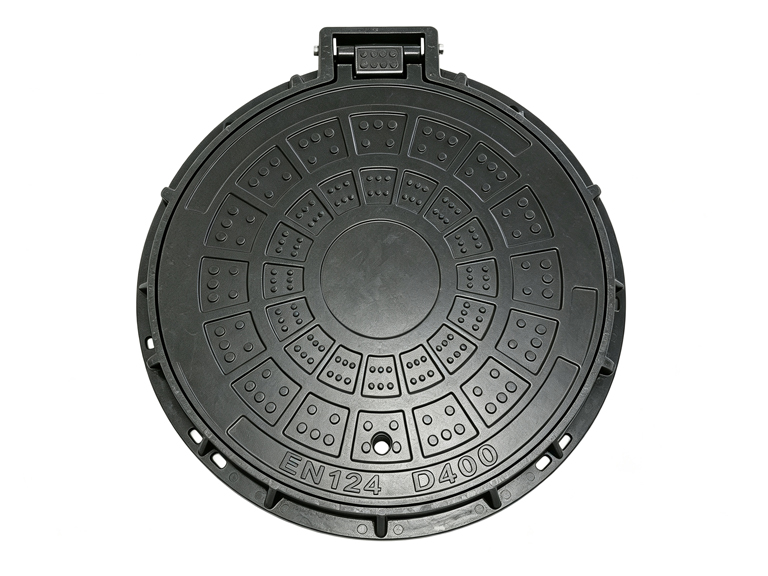
Hinged & Lockable
JM-MRS103d 605mm(lid Dia)X60mm(Lid Depth)X100mm(Frame Depth) CO450 mm
Load Rating 40 Ton EN124-D400
Gas Tight
JM-MR103d 605mm(lid Dia)X60mm(Lid Depth)X100mm(Frame Depth) CO450 mm
Load Rating 40 Ton EN124-D400
Fabricating Range:A15, B125, C250,D400
600mm (24″) C/O Composite Manhole Cover
180 Degree Hinged & Lockable
JM-MR101d1 690mm(lid Dia)X50mm(Lid Depth)X100mm(Frame Depth) CO600 mm
Load Rating 40 Ton EN124-D400
Optional Range:A15, B125, C250,D400
Lockable Anti-Slip
JM-MR102d 650mm(lid Dia)X40mm(Lid Depth)X100mm(Frame Depth) CO600 mm
Load Rating 40 Ton EN124-D400
Optional Range:A15, B125, C250,D400
120 Degree Hinged Lockable
JM-MR112d 650mm(lid Dia)X48mm(Lid Depth)X100mm(Frame Depth) CO600 mm
Load Rating 40 Ton EN124-D400
Optional Range:A15, B125, C250,D400
Watertight
JM-MR102B-WP 650mm(lid Dia)X40mm(Lid Depth)X55mm(Frame Depth) CO600 mm
Load Rating 12.5 Ton EN124-B125
Optional Range:A15, B125
640mm (25.2″) C/O Manhole Cover & Frame
Super Traffic Rated & Vented
JM-MR107E 700mm(lid Dia)X70mm(Lid Depth)X100mm(Frame Depth) CO640 mm Load Rating 60 Ton EN124-E600
Vented
JM-MR107B 700mm(lid Dia)X40mm(Lid Depth)X65mm(Frame Depth) CO650 mm Load Rating 12.5 Ton EN124-B125
Optional Range: A15,B125,C250,D400,E600
700mm (27.56″) C/O Composite Manhole Cover
Rocking Stop & Heavy Duty
JM-MR106D1- 766mm(lid Dia)X55mm(Lid Depth)X135mm(Frame Depth) CO700 mm
Load Rating: 40 Ton EN124-D400
Optional: Inner Rocking Stop lid(dia 630mm)
760mm (29.92″) C/O Manhole Cover & Frame
180 Degree Hinged & Lockable
JM-MR113D 821mm(lid Dia)X50mm(Lid Depth)X76mm(Frame Depth) CO760 mm
Load Rating: 40 Ton EN124-D400
790mm (31.1″) C/O Petrol Station Manhole Cover
Petrol Station Manhole Cover
JM-MR105C 900mm(lid Dia)X70mm(Lid Depth)X113mm(Frame Depth) CO790 mm Load Rating 25 Ton EN124-C250
Available Load Rating: B125,C250,D400
900mm (35.43″) C/O Gasoline Station Manhole Cover
Watertight & Central Lid
JM-MR105D2 1070mm(lid Dia)X70mm(Lid Depth)X100mm(Frame Depth) CO900 mm
Central Lid C/O 300mm(customizable)
Load Rating: 40 Ton EN124-D400
JINMENG Composite Manhole Covers
Jinmeng Manhole Covers are designed for today’s urban infrastructure solutions. The covers allow for real road traffic load conditions while providing low-maintenance management access. Safe to install due to the lightweight material fabrication, Covers will not leave a dangerous open hole in the ground because of zero scrap value. For customization of Load Rating, Exclusive Structures, and Surface Pattern. Please contact JINMENG Sales Team for recent details.
The material is Sheet molding compound (SMC) FRP, a fiberglass-based compression molding that is used in applications that require high resilience and strength, corrosion free and non conductive functions. SMC is comprised of several materials including fiberglass, polymer resin, release agents and thickeners.
Composite covers are used across a wide range of infrastructure applications, including:
Sewer and wastewater systems
Stormwater and drainage networks
Electrical utility chambers
Telecommunications and fiber-optic networks
Water treatment facilities
Pump stations
Industrial facilities
Commercial properties
Gas stations and fuel infrastructure
Airports and transportation facilities
Municipal utility systems
Roadside and pedestrian access points
Advantages of Composite Manhole Covers
Lightweight Construction for Easier Handling
One of the main advantages of composite manhole covers is their low weight. Compared with conventional cast iron covers, composite covers can be significantly lighter while still providing the required structural performance.
Lower weight makes transportation, installation, inspection, and routine maintenance easier. Many covers can be handled manually without heavy lifting equipment. This can reduce handling time and help lower the risk of strains and lifting-related injuries for maintenance crews.
Lightweight construction is particularly useful in locations where covers must be removed frequently, including utility chambers, drainage systems, telecommunications facilities, pump stations, and service areas.
High Strength and Reliable Load Performance
Lightweight does not mean weak. Properly engineered fiber-reinforced composite covers can provide high flexural strength, impact resistance, and load-bearing performance.
The internal structure, fiber reinforcement, resin system, cover thickness, and molding process all influence the final mechanical performance. Covers can therefore be engineered for different service conditions, from pedestrian areas to roads and other locations exposed to vehicle traffic.
Load capacity should always be selected according to the actual installation environment and the applicable standard. For roadways and other traffic areas, the required load class should be determined during project design rather than selected solely according to cover size or material.
Corrosion and Chemical Resistance
Unlike conventional ferrous metal covers, composite materials do not rust. This makes them well suited to environments exposed to water, wastewater, salt, chemicals, and underground gases.
Composite covers can maintain their performance in wet and corrosive environments where unprotected steel or cast iron may require coatings or other corrosion-control measures. They are also suitable for applications where exposure to hydrocarbons or industrial chemicals is a concern, provided that the specific resin system is selected for the expected chemical environment.
This corrosion resistance can reduce surface maintenance and help extend the service life of the access cover.
Non-Conductive Material for Utility Applications
Fiber-reinforced composite materials are electrically non-conductive. This characteristic is particularly useful around electrical equipment, telecommunications infrastructure, power distribution systems, and other utility installations.
A non-conductive cover does not provide the same electrical pathway as a conventional metal cover. It can therefore be considered where electrical insulation is an important part of the access-cover specification.
Composite materials also have lower thermal conductivity than metals, making them useful where reduced heat transfer through the cover is desirable.
Water and Environmental Protection
Manhole and access covers are exposed to rainwater, surface runoff, dirt, and debris. For applications requiring additional environmental protection, composite covers can be manufactured with sealing systems such as gaskets or O-rings.
A properly designed sealed cover can help reduce water infiltration and prevent surface debris from entering underground chambers. This is particularly important for drainage systems, wastewater infrastructure, electrical chambers, water facilities, and other installations where moisture control is required.
The sealing design, frame geometry, gasket material, and installation conditions should be matched to the project’s waterproofing requirements.
Flexible Design and Custom Manufacturing
Composite materials can be molded into different shapes and structural configurations. This provides greater design flexibility than many conventional metal-cover manufacturing methods.
Covers can be produced in round, square, rectangular, or custom geometries. Surface textures can also be designed to improve slip resistance and provide a stable walking or driving surface.
Project-specific requirements can include dimensions, load rating, frame configuration, access openings, locking systems, surface markings, colors, and identification features. Molded-in logos, labels, and other markings can also be incorporated where required.
Lower Maintenance Requirements
Composite manhole covers generally require less routine maintenance than conventional metal covers because they do not rust and typically do not require regular anti-corrosion painting.
Their resistance to moisture, corrosion, and environmental exposure can help reduce maintenance requirements throughout the service life of the product. The absence of complex mechanical components can also simplify inspection and servicing.
For infrastructure owners, the overall cost should be evaluated across the complete service life rather than based only on the initial purchase price. Handling, transportation, installation, maintenance, corrosion protection, replacement, and theft-related costs can all affect the total cost of ownership.